
Instagram 2026 Updates: What Drives Reach Now
The Instagram algorithm has changed a lot over the past few years. We pulled together the changes from the past six months and curated a list of strategies and tactics you can implement today.
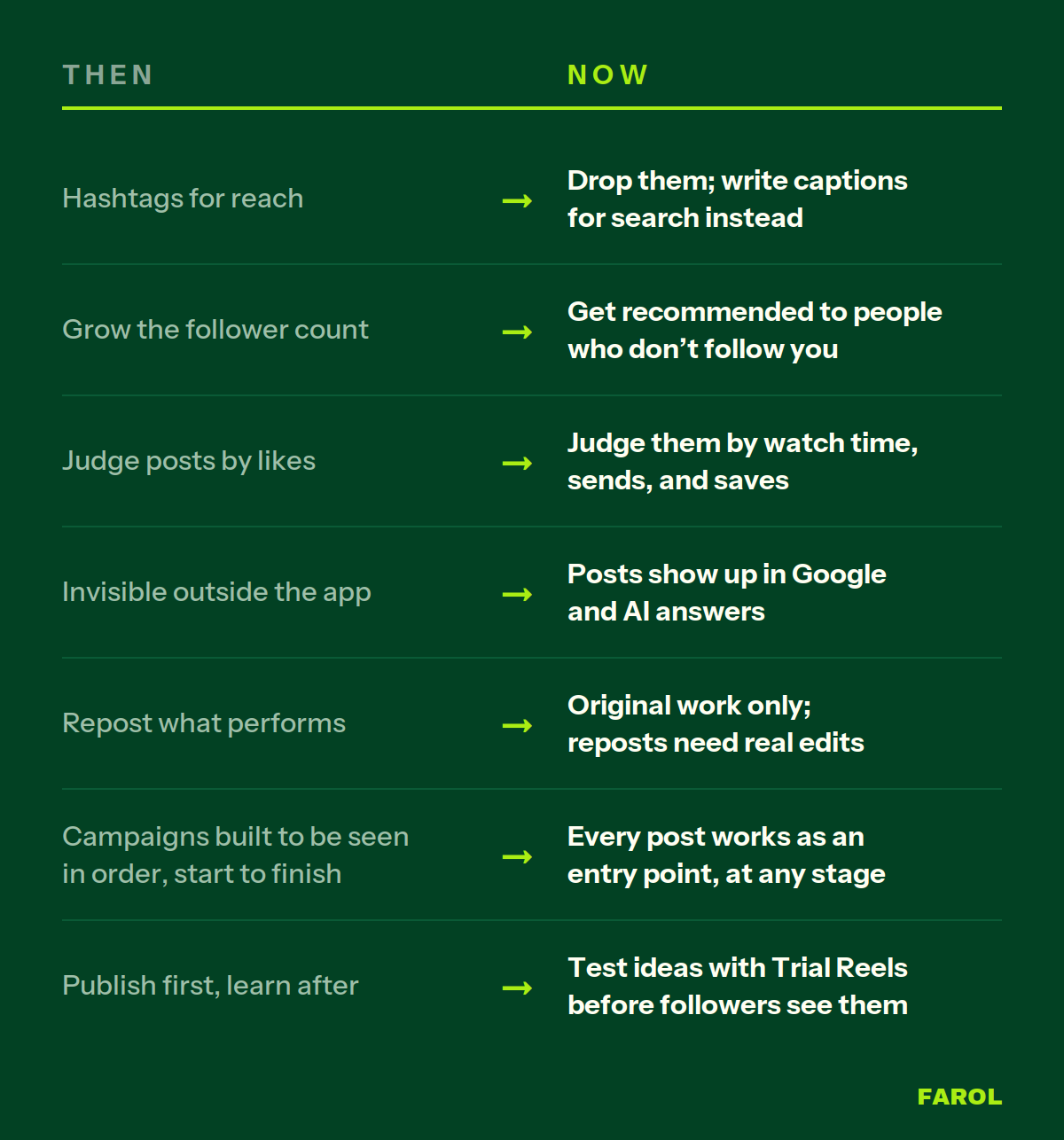
How Instagram has changed: what worked before, and what drives reach in 2026.
Part 1: What’s changed
Do hashtags still work on Instagram?
Not for reach. Hashtags now tell the algorithm what your post is about. They don’t put it in front of anyone. Our recommendation for the rest of 2026: drop them. If you keep any, keep a couple of specific ones, and put the saved time into the caption instead.
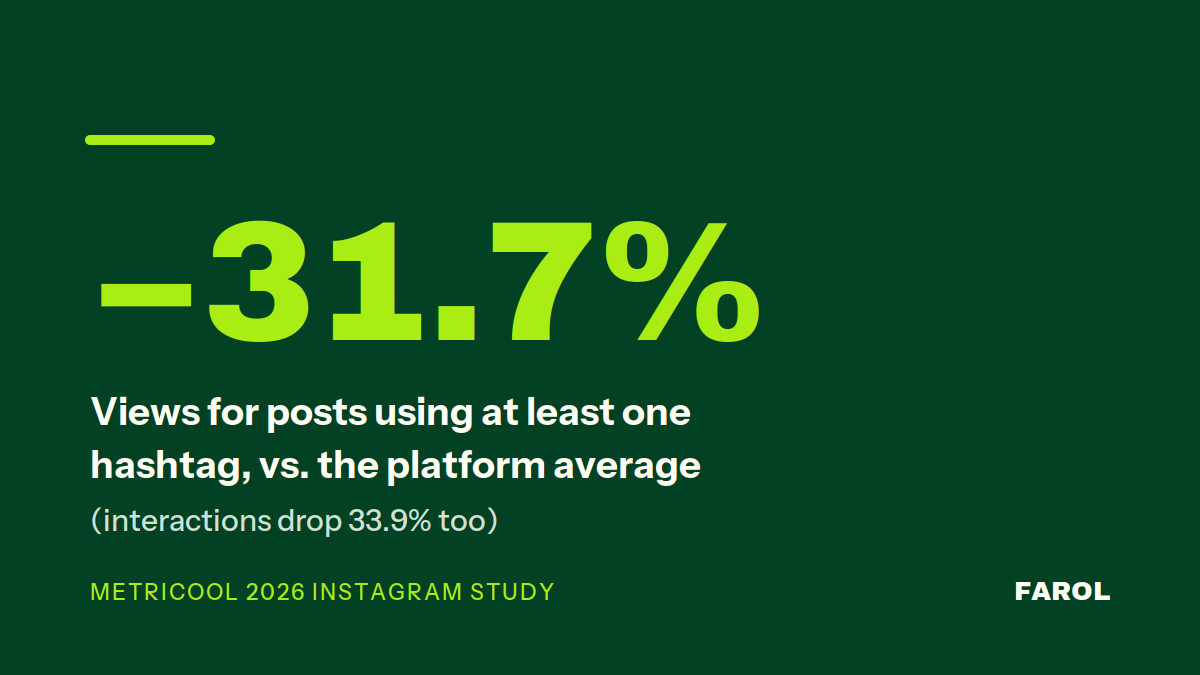
Metricool's 2026 study of the platform: posts using at least one hashtag averaged 31.7% fewer views and 33.9% fewer interactions than posts without
Why is reach down if followers grew?
Because your follower list and your audience are different things now. Adam Mosseri, the head of Instagram, calls follower count the most misleading metric on the platform. Rachel Karten’s Link in Bio newsletter built a whole issue around that point. Growth now happens one post at a time: only 21 percent of accounts under 10,000 followers grew at all this year.
The upside: a post that people watch, share, and save can now reach far more people than you have followers. Your follower count used to be the ceiling on reach. It isn't anymore.
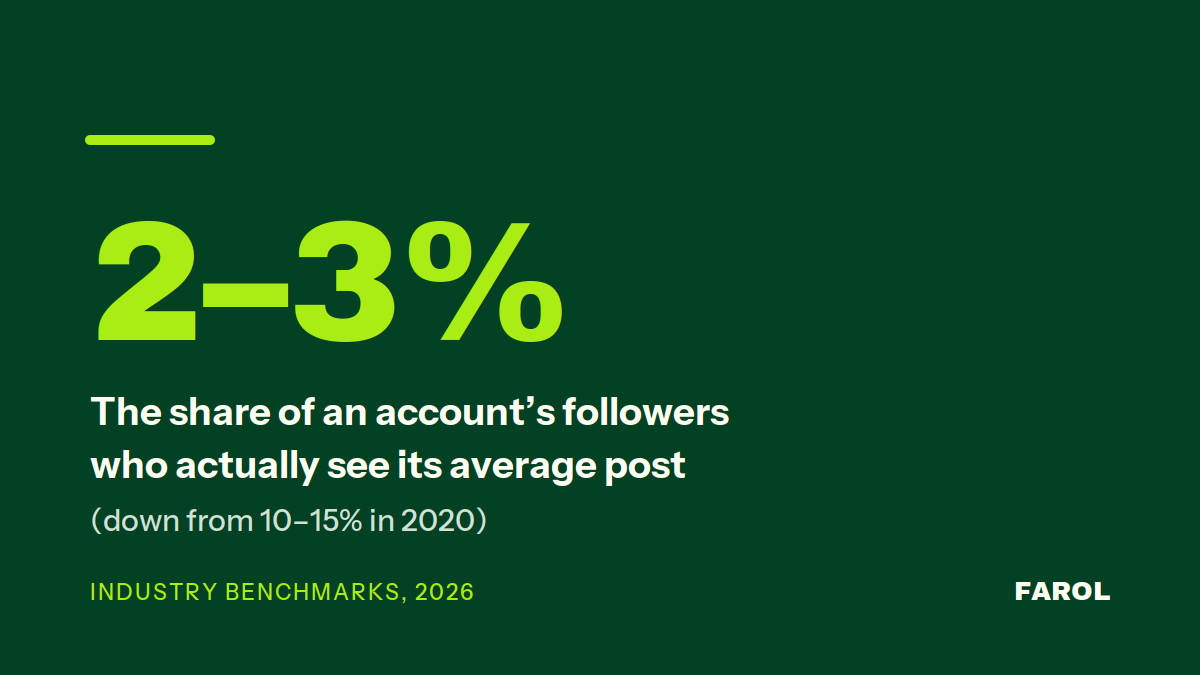
An average post reaches 2 to 3 percent of followers, and more than half of Reel views come from people who never followed at all.
Which metrics actually drive Instagram reach?
Every watch, like, comment, save, and share is a vote on who sees the post next. Mosseri has confirmed the signals that matter most.
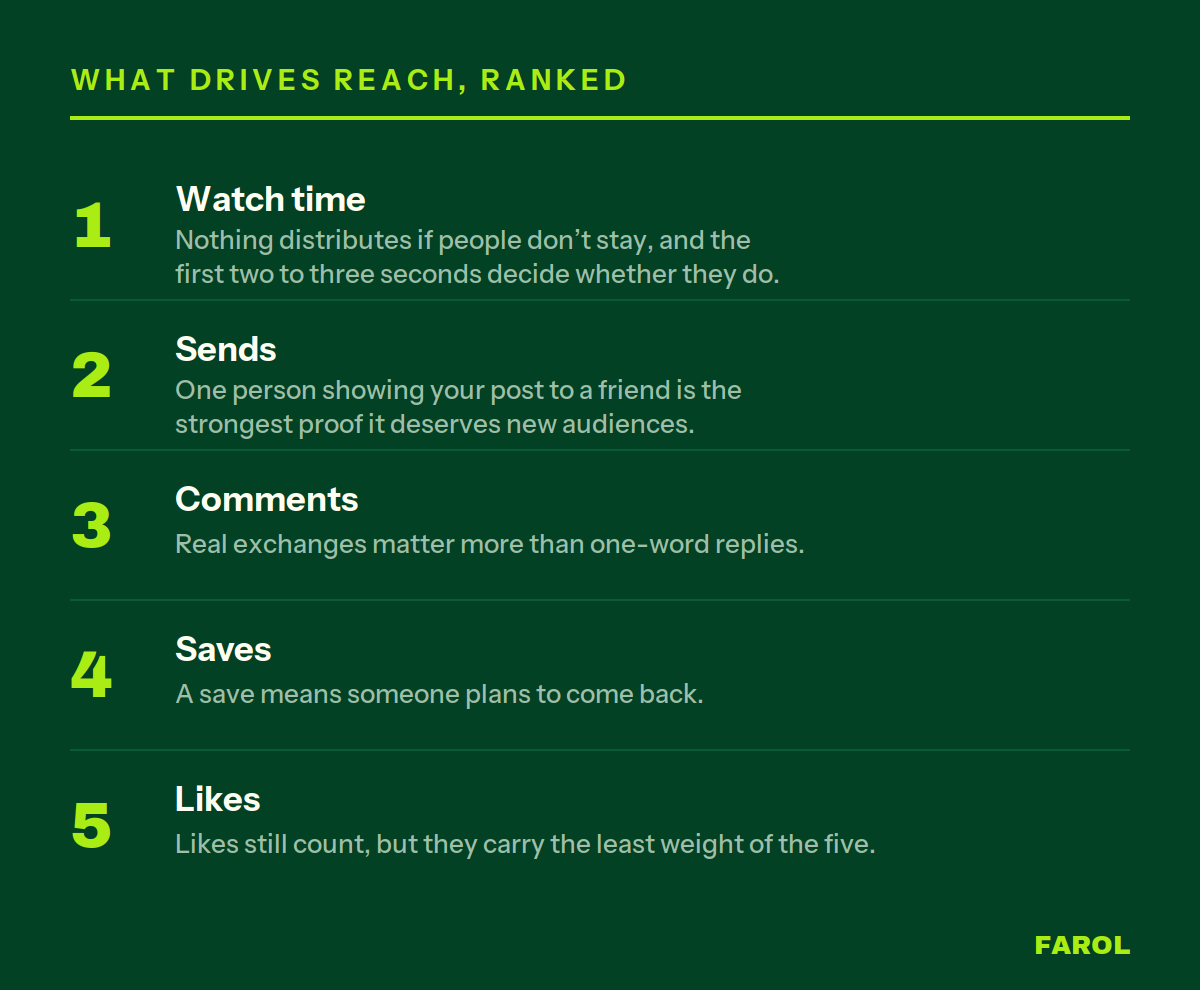
The five signals that decide who sees a post on Instagram, ranked by weight. Source: Hootsuite
Captions that ask a real question earn 37 percent more comments; engagement bait like “double-tap if you agree” gets penalized.
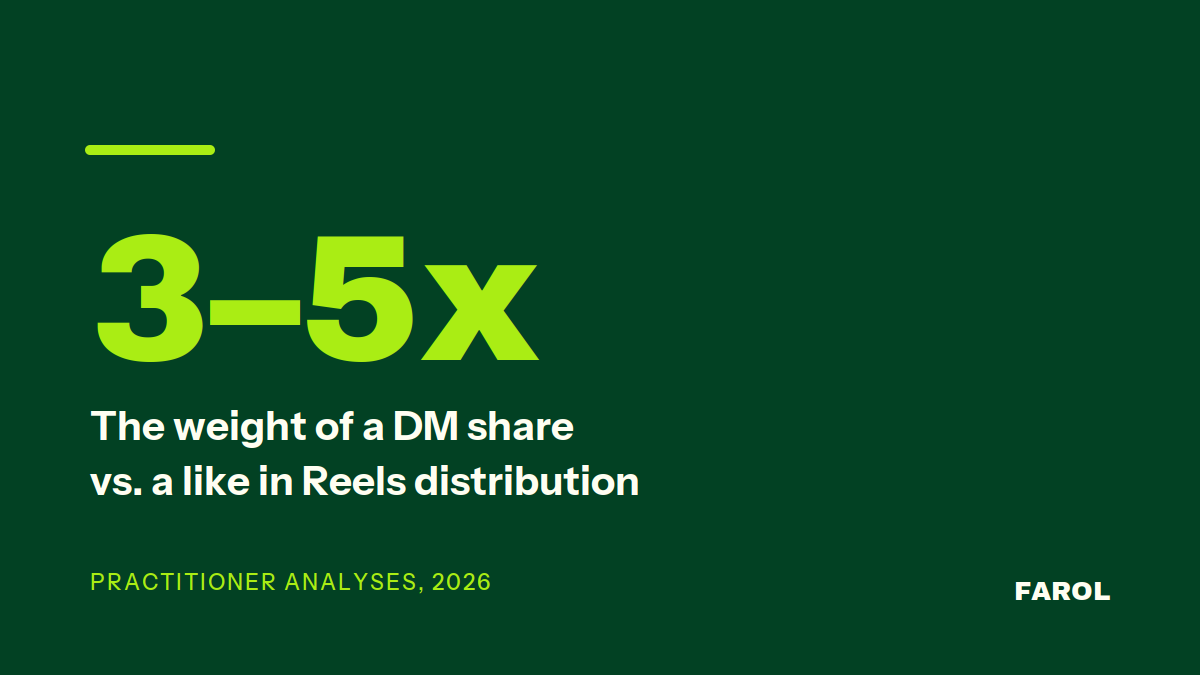
A DM share counts three to five times the value of a like, and a strong send rate, sends divided by reach, is 1 to 2 percent. Above 3 percent, a post spreads on private sharing alone.
TRY THIS WEEK · Sort your recent posts by shares instead of likes (Insights → Content You Shared, sort by Shares). Your top three are your real formats. Make more of those.
Does Instagram content show up in Google and AI answers?
Yes, and this is the year it became measurable. 67 percent of Gen Z use Instagram for search, just ahead of Google at 61. Google has indexed public business and creator accounts since 2025, and on July 7 it added Instagram to Search Console. Now brands can see which searches send people to which posts. A good post keeps working for months.
AI Overviews now show up on about half of Google searches and pull from the same index. But a study of over a billion AI citations found the engines lean on open, text-heavy sites. Instagram usually gets in through web pages that embed the post, and Perplexity rewards fresh content most of all.
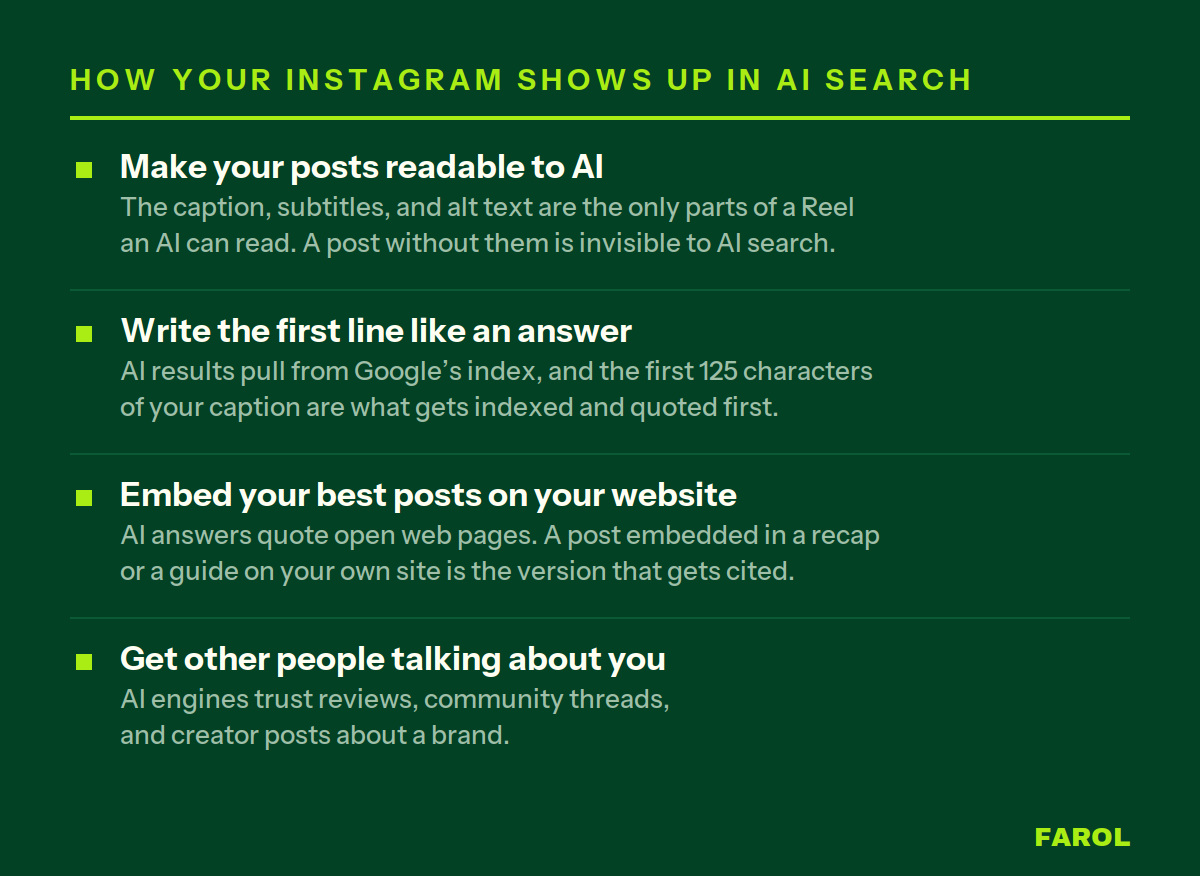
Four ways Instagram content earns a spot in AI answers. AI engines favor readable text, open web pages, and third-party mentions | Source: https://www.tryprofound.com/blog/ai-platform-citation-patterns
Does Instagram penalize reposted content?
Yes. Since April, if most of what an account posts is not its own work, or is not changed in a real way, Instagram stops showing that account to non-followers at all. The system judges your last 30 days as a whole. A few original posts don’t offset a repost habit.
Instagram is betting on original, human-made content as AI floods every feed. Mosseri put it in his year-end memo: imperfect, human content is what people will trust, “rawness as proof.” And in May, Instagram began testing an account-level “AI Creator” label for accounts that mostly post AI-made content.
A repost means publishing someone else’s work as your own post: re-uploaded videos, re-cut meme clips, another creator’s post on your grid. Instagram’s own Repost button is different; it credits the original, and the reach goes to the creator.
A meaningful change means your own commentary, your own edit, or your own framing. A new caption alone doesn’t count.
Watermarks flag content instantly. A TikTok logo tells Instagram exactly where a Reel came from.
TRY THIS WEEK · Count your last thirty days of posts and note what share you actually created. Anything reposted without real changes is quietly costing you reach.
Part 2: What you can do
Match the audience to the placement. Reels reach strangers. Carousels serve people deciding whether to follow or buy. Stories and DMs serve the people already with you.
Optimize your content distribution strategy using the on-ramps model from strategist Matthew Stasoff. Feeds don’t show posts in order, so every piece stands alone, restates the idea, and points people to a next step. Tease, announce, and sustain, with owned, earned, and paid entry points at every stage.
Drop the hashtags. Write captions for search instead: the first line is the phrase someone would type.
Turn on auto-captions and fill in alt text, so search and AI can read every post.
Post original work. Reframe and credit anything you borrow.
Build carousels people save: checklists, how-tos, breakdowns.
Run risky ideas as Trial Reels first. They go to non-followers only, so a flop costs nothing and a win comes with proof.
Track and optimize new KPIs the Instagram algorithm will prioritize: watch time, sends per reach, and saves, on 30-day windows. Most views arrive in the first few days, but winners resurface for weeks.
FAQ
Do hashtags help Instagram reach in 2026?
No. Posts are capped at five hashtags, and 2026 data shows posts using even one hashtag average 31.7 percent fewer views. Our recommendation is to drop them and put the effort into a caption written for search.
What is a good sends-per-reach rate?
A strong ratio is 1 to 2 percent of reach. Above 3 percent, content spreads through private sharing alone.
Does Instagram content appear in Google search?
Yes. Google indexes public professional Instagram content, and Instagram became a measurable Search Console property on July 7, 2026.
Why is my Instagram reach down in 2026?
The average post reaches 2 to 3 percent of followers, and reach now comes mostly from recommendations. Heavy reposting may also trigger the originality policy.
What is an on-ramp in a social campaign?
An entry point that works whenever someone arrives, like a pinned explainer or a searchable teaser. Feeds don’t show posts in order, so every post is somebody’s first.
